 IMG / TRIVIA.IO
Trivia.io
Creativity wins every time
Most hypercasual publishers passed on Trivia.io.
Quiz was seen as a niche built for dedicated trivia fans, not a mass-market hypercasual audience. We decided to self-publish it instead, betting that the right design could prove them wrong.
That bet paid off. Trivia.io reached 35 million users across Tier 1 markets and generated more than $5M in revenue, becoming one of the studio's first commercial successes. The key to its success was cracking a game design accessible enough for a broad, casual audience while staying sharp and marketable enough to scale on paid UA.
After coming up with the game concept, I wrote the first 50 questions myself, building an appealing funnel that mixed fun, challenge, and quirky questions, with a tight onboarding to match.
Self-publishing in the wake of hyper-casual
8SEC's hyper-casual years had run almost entirely through outside publishers, who owned user acquisition and monetization while the studio focused on production. Trivia.io broke that pattern: full ownership of the UA funnel and monetization stayed in-house, instead of handing control to a publisher.
That call sat with me as founder and CEO, betting the studio's own capital on UA spend rather than a publisher's, in exchange for full ownership of the outcome and a much tighter feedback loop between live data and design decisions.
Designing a quiz for casual audiences
The biggest issue with trivia games always stems from the basic way they're designed: either you know the answer and win, or you don't and lose.
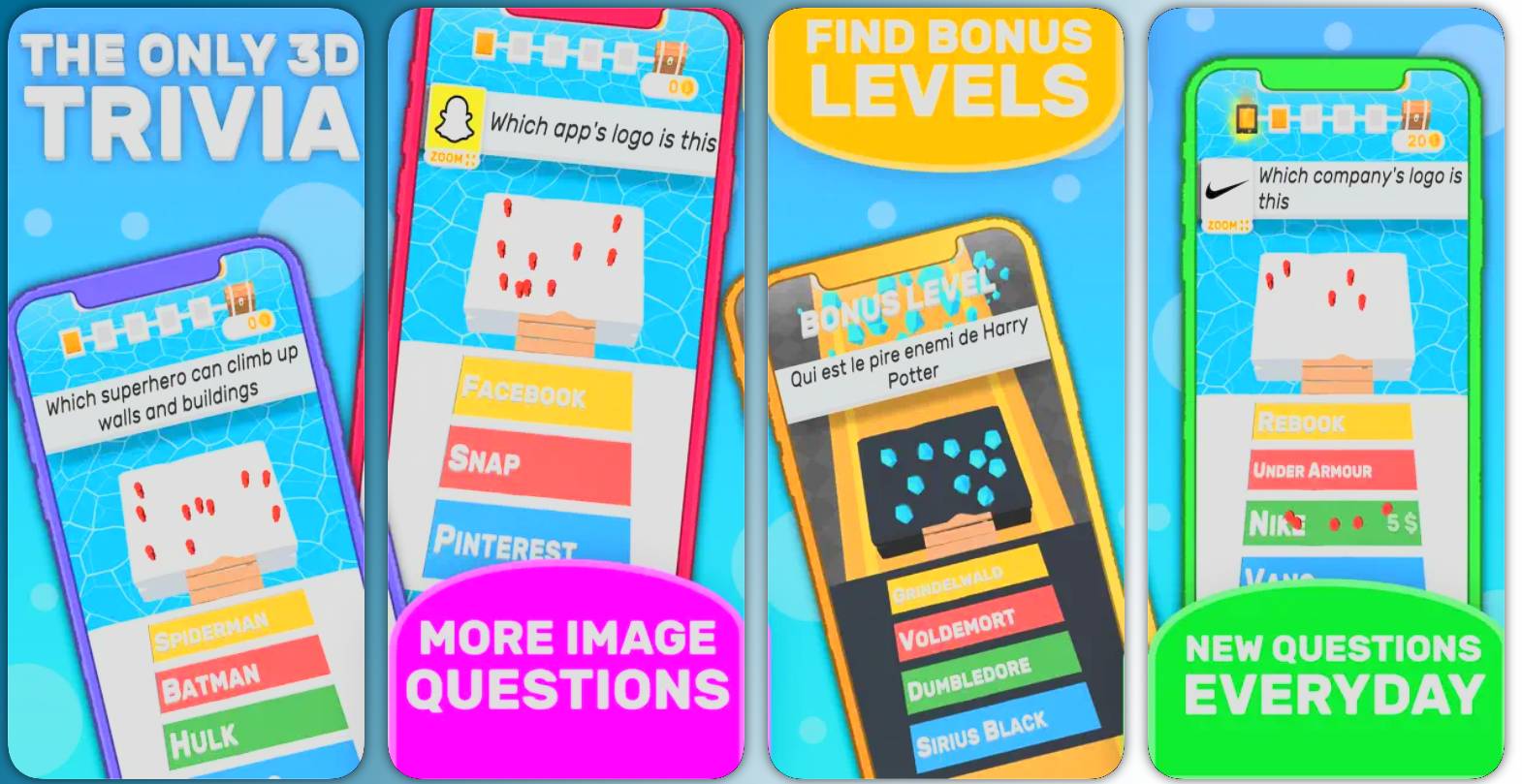
With Trivia.io, my main take on the genre was to add a betting mechanic to multiple-choice questions, giving players some control over their odds when they weren't sure of the answer. Here's the kicker: bet your whole crowd on the right answer and you're rewarded with a free skip on the next question. It gave players a reason to take risks, while keeping the game fun even when they didn't know the answer outright.
When writing the questions, I alternated between easy, funny, quirky, and challenging ones to keep the pace fun.
Down the line, we improved monetization by adding playful jokers that helped players in the moment and gave more ways to reward them across the meta-game.
We covered the full core loop up to the live economy: tracking question pacing and session length, and tuning progression systems to keep casual players coming back.
KPI & marketing success
Marketing ran in-house, drawing on years of hyper-casual user-acquisition experience to build and tune the acquisition funnels directly, and to iterate quickly on creatives and monetization against live KPIs rather than through a publisher intermediary.
That iteration showed up directly in the numbers: a $0.10 iOS US CPI sustained at scale, more than 500 UA creatives produced in-house to keep testing fresh, and Day-1 retention climbing to 45% after live-ops updates, up from an initial 30%.
We iterated the game design further, adding image questions built around logos and pop culture to make ad creatives more eye-catching, a change that improved both our marketing performance and our in-game KPIs. Image and video questions became one of the most effective levers for improving retention and CPI at the same time.